Liver Cancer Treatment in China
Of about 866,000 new liver cancer cases worldwide in 2022, around 368,000 were in China — roughly 42% [1]. In mainland China, about three quarters of primary liver cancers are attributable to hepatitis B infection [12]. Researchers at Sun Yat-sen University Cancer Center have run several randomised trials of hepatic arterial infusion chemotherapy (HAIC). For unresectable liver cancers of 7 cm or larger, HAIC extended survival compared with standard transarterial chemoembolization (TACE) [2], and for cancers that had invaded the portal vein, HAIC plus sorafenib worked better than sorafenib alone [3]. We can send your records to Prof. Ming Shi of the hospital's hepatobiliary oncology department, get you a written treatment opinion, and arrange treatment in China if you decide to come.
- Specialists
- Prof. Ming Shi
- Typical time in China
- About 2–4 weeks for surgery or ablation; at least 4–6 weeks for the first two HAIC cycles
- Written opinion
- US$199, within 5 working days, with a cost estimate
Why patients consider China for liver cancer
1. A large number of patients
China accounts for about 42% of new liver cancer cases worldwide [1].
2. Research by Chinese teams
| Setting | Study | Result |
|---|---|---|
| Single small liver cancer (5 cm or less): ablation or surgery | Randomised trial, 180 patients, Sun Yat-sen University Cancer Center, Annals of Surgery 2006 [4] | 4-year survival 67.9% with ablation vs 64.0% with surgery — similar; fewer complications after ablation |
| Unresectable large liver cancer (7 cm or more, no major vessel invasion or spread) | HAIC (FOLFOX) vs TACE, phase III, 315 patients, Sun Yat-sen University Cancer Center, Journal of Clinical Oncology 2022 [2] | Median overall survival 23.1 vs 16.1 months; response rate 46% vs 18%; serious adverse events 19% vs 30% |
| Liver cancer invading the portal vein | Sorafenib plus HAIC vs sorafenib alone, 247 patients, Sun Yat-sen University Cancer Center, JAMA Oncology 2019 [3] | Median overall survival 13.4 vs 7.1 months |
| Advanced, first line: immunotherapy plus anti-angiogenic drug | Sintilimab plus a bevacizumab biosimilar (ORIENT-32), 571 patients, Lancet Oncology 2021 [5] | Median overall survival not reached vs 10.4 months; risk of death reduced by 43% |
| Advanced, first line: immunotherapy plus anti-angiogenic drug | Camrelizumab plus rivoceranib (CARES-310), international phase III, 543 patients, Lancet 2023 [6] | Median overall survival 22.1 vs 15.2 months |
| Advanced, first line: immunotherapy | Tislelizumab vs sorafenib (RATIONALE-301), global phase III, 674 patients, JAMA Oncology 2023 [7] | Median overall survival 15.9 vs 14.1 months; not inferior to sorafenib |
More on Chinese PD-1 drugs and their prices: cancer immunotherapy in China.
3. Dedicated services for international patients
The hospital's International Medical Center has its own area; outpatients can book a named specialist, and inpatient care is led by an attending professor with a multidisciplinary team [9].
Treatment options
Your plan is decided by the doctor after reviewing your contrast CT or MRI, AFP, liver function and any pathology. The table shows common approaches.
| Situation | Common treatment | Treatment length | Approximate stay in China |
|---|---|---|---|
| Single small tumour (5 cm or less), good liver function | Surgical resection or local ablation, with similar long-term survival [4] | About 1–2 weeks in hospital after surgery; usually shorter after ablation | About 2–4 weeks |
| Large unresectable tumour, no major vessel invasion | HAIC every 3 weeks [2]; TACE may also be considered | Several cycles, depending on response | At least 4–6 weeks for the first two cycles |
| Portal vein invasion | HAIC with targeted therapy [3], or an immunotherapy combination | Depends on the plan | Depends on the plan |
| Advanced, unresectable | Immunotherapy plus an anti-angiogenic drug, such as sintilimab plus a bevacizumab biosimilar [5] or camrelizumab plus rivoceranib [6] | Continuous, with regular assessment | First cycles in China; whether treatment can continue at home is decided by the doctor |
| Liver transplantation | Not available through us. Chinese law prohibits transplant tourism, and we do not arrange organ transplants for international patients. | ||
Stays and times in China are typical estimates. Your written opinion gives the plan for your case.
Specialist we can connect you with
This specialist can provide a written opinion or an outpatient appointment through us. This page was written by our medical team based on published research.
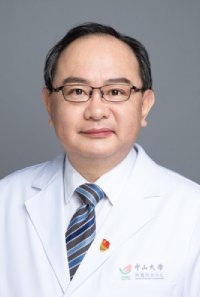
Prof. Ming Shi
Professor and Chief Physician; recipient of the National Science Fund for Distinguished Young Scholars · Department of Hepatobiliary Oncology, Sun Yat-sen University Cancer Center
Liver cancer treatment, including hepatic arterial infusion chemotherapy (HAIC) and combination therapy
- Journal of Clinical Oncology 2022 (senior author): Hepatic Arterial Infusion of Oxaliplatin, Fluorouracil, and Leucovorin Versus Transarterial Chemoembolization for Large Hepatocellular Carcinoma: A Randomized Phase III Trial — PubMed 34648352
- JAMA Oncology 2019 (senior author): Sorafenib Plus Hepatic Arterial Infusion of Oxaliplatin, Fluorouracil, and Leucovorin vs Sorafenib Alone for Hepatocellular Carcinoma With Portal Vein Invasion: A Randomized Clinical Trial — PubMed 31070690
- European Journal of Cancer 2022 (senior author): Lenvatinib, toripalimab plus hepatic arterial infusion chemotherapy in patients with high-risk advanced hepatocellular carcinoma: A biomolecular exploratory, phase II trial — PubMed 35981413
Hospital: Sun Yat-sen University Cancer Center
- Founded in 1964 in Guangzhou; a Grade A tertiary cancer hospital.
- Ranked in the top five for oncology in the China Hospital Specialty Reputation Ranking (2023) by Fudan University's Hospital Management Institute [10].
- Has liver surgery and hepatobiliary oncology teams and an International Medical Center [8] [9].
- Listed among Guangdong's first pilot hospitals for international medical services in 2026 [11].
Costs
Your personal cost estimate is included in the specialist's written opinion.
| Item | China (SYSUCC International Medical Center) |
|---|---|
| Specialist's written opinion | US$199 |
| First visit, HAIC, TACE, liver resection, ablation | Quoted individually in your cost estimate |
| Immunotherapy (per cycle) | See Chinese PD-1 drug prices |
| Accommodation near the hospital (28 nights) | Apartment-style room with fridge and washing machine: mostly US$750–1,000. Hotel room: US$1,400–2,250. |
| Food, local transport and other living costs (per person, per month) | About US$550–600 (around RMB 4,000) |
Accommodation: Trip.com prices for rooms within about 400 m of SYSUCC, 28 nights from 7 December 2026, checked on 12 November 2026, including taxes and the discounts shown at the time. Prices change with dates and season. Living costs: Numbeo, November 2026. More on accommodation.
From first contact to starting treatment
- Send your records
Contrast CT or MRI (DICOM), AFP, liver function and hepatitis tests, pathology report if available, treatment history. Same day - Initial review
A medical coordinator checks and translates your records. Within 24 hours - Specialist's written opinion
Recommended treatment and a cost estimate. Within 5 working days of receiving your complete records - Travel arrangements
Appointment, hospital invitation letter, visa support, accommodation and airport pickup. - Hospital visit
Consultation at SYSUCC, with additional tests if needed. - Treatment starts
A coordinator and interpreter support you throughout.
Frequently asked questions
Can liver cancer be cured?
For a single small liver cancer treated with surgery or ablation, the 4-year survival rate in a trial at Sun Yat-sen University Cancer Center was about 64–68% [4]. For intermediate and advanced disease, the aim is usually to control the tumour and extend life. Your outlook depends on the stage and your liver function.
What is HAIC, and how is it different from TACE?
In hepatic arterial infusion chemotherapy (HAIC), a catheter is placed in the artery that feeds the tumour and chemotherapy is infused over many hours. In transarterial chemoembolization (TACE), chemotherapy and embolic material are injected to block the tumour's blood supply. In a phase III trial at Sun Yat-sen University Cancer Center, patients with liver cancers of 7 cm or larger lived longer with HAIC than with TACE [2].
How long will I need to stay in China?
Surgery or ablation usually takes about 2–4 weeks. HAIC is given every 3 weeks, so plan for at least 4–6 weeks for the first two cycles; for systemic treatment, the first cycles are given in China. These are typical estimates; your written opinion gives the plan for your case.
Can I have a liver transplant in China?
No. Chinese law prohibits transplant tourism, and we do not arrange organ transplants for international patients.
I have hepatitis B. Does that affect treatment?
Yes. The doctor checks your liver function and hepatitis B viral load and usually starts antiviral treatment alongside cancer treatment. In a randomised trial in China, antiviral therapy after surgery for hepatitis B-related liver cancer improved long-term survival [13].
I do not speak Chinese. How will I communicate?
Our medical coordinators work with you in English (or Russian) throughout, and an interpreter accompanies you to appointments. The hospital's International Medical Center also has a team for international patients [9].
How do I pay? Can I use insurance?
Hospitals accept self-payment. Some international departments in China also accept commercial insurance; whether your insurer can settle bills directly depends on your policy, and we check this with the hospital before you travel.
How is follow-up done after I return home?
Follow-up usually includes regular AFP blood tests and contrast CT or MRI, every few months at first; your doctor sets the schedule. We arrange remote follow-up consultations and translate your reports.
Can I get a specialist opinion without travelling to China first?
Yes. Upload your records and the specialist will give a written opinion. You can then decide whether to come to China.
Leading hospitals and specialists for liver cancer in China
From our directory of leading Chinese hospitals: where senior specialists list liver cancer as a clinical focus, sorted by their first- or senior-author papers on it since 2016. This is not a quality ranking. How we build this directory
Senior specialists in our directory
Prof. Bangde Xiang(Guangxi Medical University Cancer Hospital) · Dr. Yaojun Zhang(SYSUCC) · Prof. Qiang Gao(Zhongshan Hospital, Fudan University) · Prof. Xinrong Yang(Zhongshan Hospital, Fudan University) · Prof. Yinghong Shi(Zhongshan Hospital, Fudan University) · Dr. Xin Yin(Zhongshan Hospital, Fudan University) · Dr. Tianqiang Song(TMUCIH) · Dr. Ning Ren(Zhongshan Hospital, Fudan University) · Prof. Bin Liang(Wuhan Union Hospital) · Dr. Jinzhang Chen(Nanfang Hospital) · Prof. Zhongguo Zhou(SYSUCC) · Prof. Wei Lu(TMUCIH)
We have not necessarily worked with these doctors. Specialists we can connect you with are listed above.
Get a specialist's written opinion
Upload your CT or MRI and test results. A medical coordinator will reply within 24 hours and pass your records to Prof. Ming Shi.
Start hereReferences
- International Agency for Research on Cancer. GLOBOCAN 2022 China fact sheet (367,657 new liver cancer cases in China); about 866,136 new cases worldwide in 2022. https://gco.iarc.who.int/media/globocan/factsheets/populations/160-china-fact-sheet.pdf
- Li QJ, et al. Hepatic arterial infusion of oxaliplatin, fluorouracil, and leucovorin versus transarterial chemoembolization for large hepatocellular carcinoma: a randomized phase III trial. J Clin Oncol. 2022. PMID 34648352. https://pubmed.ncbi.nlm.nih.gov/34648352/
- He M, et al. Sorafenib plus hepatic arterial infusion of oxaliplatin, fluorouracil, and leucovorin vs sorafenib alone for hepatocellular carcinoma with portal vein invasion: a randomized clinical trial. JAMA Oncol. 2019. PMID 31070690. https://pubmed.ncbi.nlm.nih.gov/31070690/
- Chen MS, et al. A prospective randomized trial comparing percutaneous local ablative therapy and partial hepatectomy for small hepatocellular carcinoma. Ann Surg. 2006. PMID 16495695. https://pubmed.ncbi.nlm.nih.gov/16495695/
- Ren Z, et al. Sintilimab plus a bevacizumab biosimilar (IBI305) versus sorafenib in unresectable hepatocellular carcinoma (ORIENT-32). Lancet Oncol. 2021. PMID 34143971. https://pubmed.ncbi.nlm.nih.gov/34143971/
- Qin S, et al. Camrelizumab plus rivoceranib versus sorafenib as first-line therapy for unresectable hepatocellular carcinoma (CARES-310). Lancet. 2023. PMID 37499670. https://pubmed.ncbi.nlm.nih.gov/37499670/
- Qin S, et al. Tislelizumab vs sorafenib as first-line treatment for unresectable hepatocellular carcinoma (RATIONALE-301). JAMA Oncol. 2023. PMID 37796513. https://pubmed.ncbi.nlm.nih.gov/37796513/
- Sun Yat-sen University Cancer Center. Liver surgery — specialists. https://english.sysucc.org.cn/list_26.aspx?lcid=102
- Sun Yat-sen University Cancer Center. International Medical Center. https://english.sysucc.org.cn/index_79.aspx
- Fudan University Hospital Management Institute, China Hospital Specialty Reputation Ranking 2023 (oncology), as reported by The Paper. https://www.thepaper.cn/newsDetail_forward_25427491
- Report on Guangdong international medical service pilot hospitals (March 2026). https://huacheng.gz-cmc.com/pages/2026/03/27/df7448fe8b724aad84d266c2b0fe77db.html
- Lin et al. Hepatoma Research, 2025: meta-analysis of 240 studies (71,905 cases); hepatitis B attributable fraction for primary liver cancer in mainland China 76.5%. https://www.oaepublish.com/articles/2394-5079.2024.84
- Huang G, et al. Antiviral therapy improves postoperative survival in patients with hepatocellular carcinoma: a randomized controlled trial. Ann Surg. 2015. PMID 25072444. https://pubmed.ncbi.nlm.nih.gov/25072444/