Cancer Immunotherapy in China: Chinese PD-1 Drugs
PD-1 inhibitors are immunotherapy drugs that help the immune system recognise and attack cancer cells. Chinese companies have developed several PD-1 inhibitors, including toripalimab, tislelizumab, camrelizumab and sintilimab. They have been tested in large phase III trials in cancers common in Asia, such as nasopharyngeal, esophageal and liver cancer, with results published in journals including JAMA, The Lancet and Nature Medicine [1–9]. Two have been approved by the US FDA: toripalimab (2023, nasopharyngeal cancer) and tislelizumab (2024, second-line esophageal cancer) [10] [11]. Prices in China are far lower than in the US: after China's 2020 national reimbursement negotiation, a 240 mg vial of toripalimab was reported at about RMB 2,101 [12], while its US wholesale price was set at $8,892 per vial [13].
- Specialists
- Prof. Hai-Qiang Mai, Prof. Li Zhang
- Typical time in China
- About 3–6 weeks for the first one or two cycles
- Written opinion
- US$199, within 5 working days, with a cost estimate
What PD-1 immunotherapy is
- Cancer cells can use PD-1 as a "brake" to hide from the immune system. PD-1 inhibitors release the brake so immune cells can attack the cancer.
- It does not work for every patient. Whether it suits you depends on the type and stage of cancer and your test results, and is decided by your doctor.
- Side effects differ from chemotherapy and are mainly immune-related inflammation, such as pneumonitis, colitis, hepatitis, hormone problems, kidney inflammation and skin reactions [10].
Phase III evidence for Chinese PD-1 drugs
| Drug | Cancer and setting | Trial | Result |
|---|---|---|---|
| Toripalimab | Recurrent or metastatic nasopharyngeal cancer, first line, with chemotherapy | JUPITER-02, 289 patients, Nature Medicine 2021, JAMA 2023 [1] | Median progression-free survival 21.4 vs 8.2 months |
| Toripalimab | Advanced esophageal squamous cell carcinoma, first line, with chemotherapy | JUPITER-06, 514 patients, Cancer Cell 2022 [2] | Risk of progression and risk of death each reduced by about 42% |
| Camrelizumab | Recurrent or metastatic nasopharyngeal cancer, first line, with chemotherapy | CAPTAIN-1st, 263 patients, Lancet Oncology 2021 [3] | Median progression-free survival 9.7 vs 6.9 months |
| Camrelizumab | Advanced esophageal squamous cell carcinoma, first line, with chemotherapy | ESCORT-1st, 596 patients, JAMA 2021 [4] | Median overall survival 15.3 vs 12.0 months |
| Camrelizumab | Unresectable liver cancer, first line, with rivoceranib | CARES-310, international, 543 patients, Lancet 2023 [5] | Median overall survival 22.1 vs 15.2 months |
| Tislelizumab | Advanced esophageal squamous cell carcinoma, first line, with chemotherapy | RATIONALE-306, global, 649 patients, Lancet Oncology 2023 [6] | Median overall survival 17.2 vs 10.6 months |
| Tislelizumab | Advanced esophageal squamous cell carcinoma, second line | RATIONALE-302, 512 patients, Journal of Clinical Oncology 2022 [7] | Median overall survival 8.6 vs 6.3 months |
| Sintilimab | Advanced esophageal squamous cell carcinoma, first line, with chemotherapy | ORIENT-15, 659 patients, BMJ 2022 [8] | Median overall survival 16.7 vs 12.5 months |
| Sintilimab | Unresectable liver cancer, first line, with a bevacizumab biosimilar | ORIENT-32, 571 patients, Lancet Oncology 2021 [9] | Median overall survival not reached vs 10.4 months |
Prices: China vs the United States
| Drug | Vial / dose | China (after the 2020 reimbursement negotiation, reported March 2021) | United States |
|---|---|---|---|
| Toripalimab | 240 mg vial | RMB 2,100.97 per vial [12] | Wholesale price $8,892.03 per vial (2023) [13] |
| Tislelizumab | 100 mg vial | RMB 2,180 per vial [12] | — |
| Camrelizumab | 200 mg vial | RMB 2,928 per vial [12] | — |
| For reference: pembrolizumab (Keytruda) | Dose every 3 weeks | — | $11,115.04 (2023) [13] |
- The China prices are the prices before insurance reimbursement. International patients cannot use Chinese health insurance and pay these prices themselves; prices may have changed since 2021.
- Prices at the SYSUCC International Medical Center may differ from the national prices above; your cost estimate gives the current price.
- The number of vials per cycle depends on the drug, the cancer and your body weight, and is decided by your doctor.
Specialists we can connect you with
These specialists can provide a written opinion or an outpatient appointment through us. This page was written by our medical team based on published research and reports.
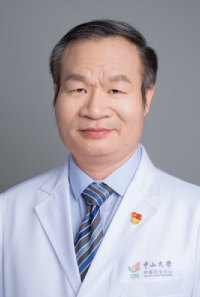
Prof. Hai-Qiang Mai
Assistant President; Director, Department of Nasopharyngeal Carcinoma; Professor and Chief Physician · Department of Nasopharyngeal Carcinoma, Sun Yat-sen University Cancer Center
Comprehensive treatment of nasopharyngeal cancer, including chemoradiotherapy and immunotherapy
- Nature Medicine 2021 (first author): Toripalimab or placebo plus chemotherapy as first-line treatment in advanced nasopharyngeal carcinoma: a multicenter randomized phase 3 trial — PubMed 34341578
- JAMA 2023 (first author): Toripalimab Plus Chemotherapy for Recurrent or Metastatic Nasopharyngeal Carcinoma: The JUPITER-02 Randomized Clinical Trial — PubMed 38015220
- Journal of the National Cancer Institute 2011 (senior author): Concurrent chemoradiotherapy vs radiotherapy alone in stage II nasopharyngeal carcinoma: phase III randomized trial — PubMed 22056739
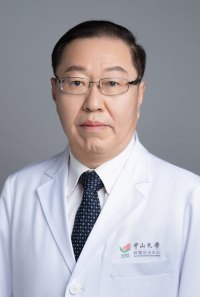
Prof. Li Zhang
Professor and PhD Supervisor; Deputy Director, Lung Cancer Research Institute, Sun Yat-sen University · Department of Medical Oncology, Sun Yat-sen University Cancer Center
Drug treatment of nasopharyngeal cancer and lung cancer, including chemotherapy and immunotherapy
- Lancet 2016 (first author): Gemcitabine plus cisplatin versus fluorouracil plus cisplatin in recurrent or metastatic nasopharyngeal carcinoma: a multicentre, randomised, open-label, phase 3 trial — PubMed 27567279
- Lancet Oncology 2021 (senior author): Camrelizumab versus placebo in combination with gemcitabine and cisplatin as first-line treatment for recurrent or metastatic nasopharyngeal carcinoma (CAPTAIN-1st): a multicentre, randomised, double-blind, phase 3 trial — PubMed 34174189
- Lancet Oncology 2018 (senior author): Camrelizumab (SHR-1210) alone or in combination with gemcitabine plus cisplatin for nasopharyngeal carcinoma: results from two single-arm, phase 1 trials — PubMed 30213452
Immunotherapy for esophageal cancer: see esophageal cancer (Prof. Jian-Hua Fu). For liver cancer: see liver cancer (Prof. Ming Shi).
Frequently asked questions
How do Chinese PD-1 drugs compare with Keytruda or Opdivo?
The trials on this page compared Chinese PD-1 drugs with chemotherapy, placebo plus chemotherapy, or sorafenib — not directly with Keytruda or Opdivo — so there is no head-to-head answer. Toripalimab and tislelizumab have both been approved by the US FDA [10] [11].
What are the side effects?
Side effects are mainly immune-related inflammation, such as pneumonitis, colitis, hepatitis, thyroid and other hormone problems, kidney inflammation and skin reactions [10]. You will have regular check-ups during treatment and should report new symptoms promptly.
Do I need a PD-L1 test?
It depends on the cancer and the drug. In the JUPITER-02 trial in nasopharyngeal cancer, patients benefited from toripalimab regardless of PD-L1 level [1]. Your doctor will tell you whether testing is needed.
How long will I need to stay in China?
Treatment is usually given every 3 weeks. The first cycles are given in China; whether you can continue at home depends on your doctor and on whether the drug is available in your country. Plan for about 3–6 weeks in China for the first one or two cycles.
Can international patients use Chinese health insurance?
No. International patients pay for treatment themselves.
Can I get a specialist opinion without travelling to China first?
Yes. Upload your records and a specialist will advise whether immunotherapy is suitable for you.
Is immunotherapy right for you?
Upload your records. A medical coordinator will reply within 24 hours and pass them to a specialist.
Start hereReferences
- Mai HQ, et al. JUPITER-02. JAMA. 2023. PMID 38015220; interim results Nat Med. 2021. PMID 34341578. https://pubmed.ncbi.nlm.nih.gov/38015220/
- Wang ZX, et al. JUPITER-06. Cancer Cell. 2022. PMID 35245446. https://pubmed.ncbi.nlm.nih.gov/35245446/
- Yang Y, et al. CAPTAIN-1st. Lancet Oncol. 2021. PMID 34174189. https://pubmed.ncbi.nlm.nih.gov/34174189/
- Luo H, et al. ESCORT-1st. JAMA. 2021. PMID 34519801. https://pubmed.ncbi.nlm.nih.gov/34519801/
- Qin S, et al. CARES-310. Lancet. 2023. PMID 37499670. https://pubmed.ncbi.nlm.nih.gov/37499670/
- Xu J, et al. RATIONALE-306. Lancet Oncol. 2023. PMID 37080222. https://pubmed.ncbi.nlm.nih.gov/37080222/
- Shen L, et al. RATIONALE-302. J Clin Oncol. 2022. PMID 35442766. https://pubmed.ncbi.nlm.nih.gov/35442766/
- Lu Z, et al. ORIENT-15. BMJ. 2022. PMID 35440464. https://pubmed.ncbi.nlm.nih.gov/35440464/
- Ren Z, et al. ORIENT-32. Lancet Oncol. 2021. PMID 34143971. https://pubmed.ncbi.nlm.nih.gov/34143971/
- U.S. FDA. FDA approves toripalimab-tpzi for nasopharyngeal carcinoma (October 2023). https://www.fda.gov/drugs/resources-information-approved-drugs/fda-approves-toripalimab-tpzi-nasopharyngeal-carcinoma
- The ASCO Post. FDA approves tislelizumab for previously treated patients with advanced esophageal cancer (March 2024). https://ascopost.com/news/march-2024/fda-approves-tislelizumab-for-previously-treated-patients-with-advanced-esophageal-cancer
- The Paper (澎湃新闻). Prices of three Chinese PD-1 drugs after the 2020 national reimbursement negotiation (1 March 2021). https://www.thepaper.cn/newsDetail_forward_11505337
- Fierce Pharma. Coherus prices China-made PD-1 drug Loqtorzi at 20% discount to Merck's Keytruda (2023). https://www.fiercepharma.com/marketing/coherus-prices-china-made-pd-1-drug-loqtorzi-20-discount-mercks-keytruda