Proton and Carbon Ion Therapy in China
Proton and carbon ion (heavy ion) therapy are forms of radiotherapy that release most of their energy at a set depth, so tissue beyond the tumour receives less radiation. By the end of 2024, mainland China had nine proton therapy centres in operation [1]. Shanghai Proton and Heavy Ion Center, licensed in 2015 [1], offers both protons and carbon ions; it treated 1,267 patients in 2025 and more than 9,300 in total [9]. Its team has published results of carbon ion treatment for recurrent nasopharyngeal cancer: 2-year overall survival of 83.7% in 206 patients [3]. In 2019 the hospital said a course of 8 to 35 sessions cost about RMB 310,000 on average, including the hospital stay and tests [2]. We can connect you with Dr. Lin Kong of Shanghai Proton and Heavy Ion Center, first author of its trials in recurrent nasopharyngeal cancer, and Prof. Jiade J. Lu, the centre's former Executive Vice President, now at Heyou International Hospital in Foshan.
- Specialists
- Dr. Lin Kong, Prof. Jiade J. Lu
- Typical time in China
- About 1–2 months (usually 8 to 35 sessions)
- Written opinion
- US$199, within 5 working days, with a cost estimate
How protons and carbon ions differ from standard radiotherapy
| Standard radiotherapy (photons) | Protons | Carbon ions | |
|---|---|---|---|
| Dose | The beam passes through the body, so tissue in front of and behind the tumour is exposed | Most energy is released at a set depth; little dose beyond the tumour | As with protons, the dose is concentrated |
| Biological effect | Reference | Similar to standard radiotherapy | Stronger; often used for tumours that respond poorly to standard radiotherapy and for re-treatment |
| Availability in China | Widespread | Nine centres in operation (end of 2024) [1] | Few; available at Shanghai Proton and Heavy Ion Center [1] [2] |
What it is used for
Shanghai Proton and Heavy Ion Center has published its experience with:
| Condition | Study | Result |
|---|---|---|
| Nasopharyngeal cancer that has come back after radiotherapy | Carbon ion re-irradiation, 206 patients, Cancer 2020 [3] | 2-year overall survival 83.7%, local control 58.0%; no acute side effects of grade 3 or higher; serious late effects included mucosal necrosis (16.0%) and temporal lobe necrosis (0.97%) |
| Chordoma and chondrosarcoma of the skull base and cervical spine | Protons and/or carbon ions, 91 patients, Radiation Oncology 2019 [4] | 2-year local control 86.2%; overall survival 87.2% |
| Cancers of the nasal cavity and sinuses | Single-centre experience, Cancer Medicine 2020 [5] | — |
| Malignant glioma | Early experience, Cancer 2020 [6] | — |
For recurrent nasopharyngeal cancer, see also our nasopharyngeal cancer page, where we can also connect you with Prof. Hai-Qiang Mai of Sun Yat-sen University Cancer Center.
Proton and carbon ion therapy are not suitable for every cancer, and for many cancers the evidence is still limited. In children with brain tumours, for example, a 2022 meta-analysis found similar rates of second cancers after proton therapy (1.5%) and standard radiotherapy (1.8%) [7]. A radiation oncologist decides whether it suits you after reviewing your records.
Some proton and carbon ion centres in China
| Hospital | City | Particles | Reported cost per course |
|---|---|---|---|
| Shanghai Proton and Heavy Ion Center | Shanghai | Protons and carbon ions | Treatment fee RMB 278,000 (hospital FAQ, 2018) [11]; about RMB 310,000 on average including hospital stay and tests (2019) [2] |
| Ruijin Hospital, Shanghai Jiao Tong University School of Medicine | Shanghai | Protons, using a Chinese-made system [8] | RMB 170,000 [1] |
| Guangzhou Taihe Cancer Hospital | Guangzhou | Protons | RMB 295,000 [1] |
| Heyou International Hospital | Foshan | Protons and carbon ions | Consultation clinic open; treatment system in clinical validation [12] |
Most centres charge RMB 260,000–270,000 per course [1]. These are published prices; the centre confirms the price for your case when it accepts you.
For international patients
- Shanghai Proton and Heavy Ion Center has treated more than 100 patients from outside mainland China, and 40% of its patients use commercial insurance [9].
- It does not currently treat patients aged 14 or younger [10].
- The route is a specialist clinic visit, then a multidisciplinary review, then admission and treatment planning [10]. We prepare and translate your records beforehand so the first visit can focus on the decision.
- The centre does not publish waiting times. It is adding one more proton and one more carbon ion system, due by the end of 2028 [9]. We ask for the current waiting time when we submit your records.
Specialists we can connect you with
These specialists can provide a written opinion or an outpatient appointment through us. This page was written by our medical team based on published research.
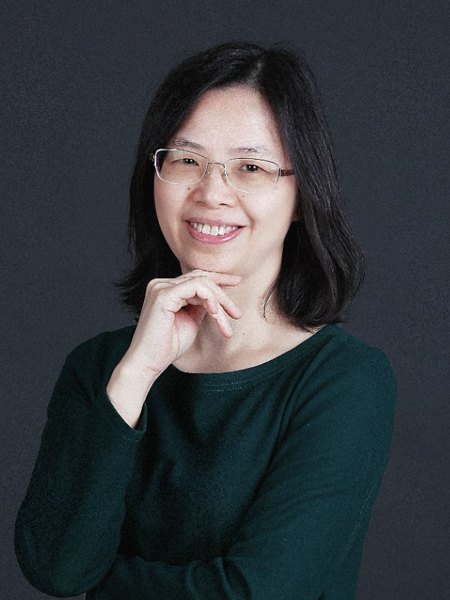
Dr. Lin Kong
Assistant President; Director, Department of Head and Neck and Central Nervous System Tumors I; Chief Physician and Doctoral Supervisor · Department of Head and Neck and Central Nervous System Tumors, Shanghai Proton and Heavy Ion Center
Proton and carbon ion therapy for head and neck cancers, including recurrent nasopharyngeal cancer, and brain tumours
- Journal of Cancer 2016 (first author): Phase I/II Trial Evaluating Carbon Ion Radiotherapy for Salvaging Treatment of Locally Recurrent Nasopharyngeal Carcinoma — PubMed 27162535
- Chinese Journal of Cancer 2016 (first author): Phase I/II trial evaluating concurrent carbon-ion radiotherapy plus chemotherapy for salvage treatment of locally recurrent nasopharyngeal carcinoma — PubMed 28007028
- Cancer 2020 (first author): Particle radiation therapy in the management of malignant glioma: Early experience at the Shanghai Proton and Heavy Ion Center — PubMed 32167589
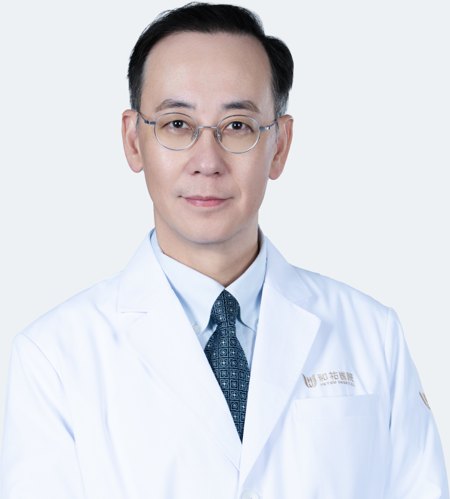
Prof. Jiade J. Lu
Executive Vice President, Heyou International Hospital; Director, Heyou Cancer Center and Proton and Heavy Ion Center; Professor · Proton and Heavy Ion Center, Heyou International Hospital, Foshan
Proton and carbon ion radiotherapy, including re-irradiation of recurrent head and neck cancers
- Cancer 2020 (senior author): Clinical outcomes of carbon-ion radiotherapy for patients with locoregionally recurrent nasopharyngeal carcinoma — PubMed 32931035
- Cancer Communications 2019 (senior author): Carbon ion radiotherapy boost in the treatment of glioblastoma: a randomized phase I/III clinical trial — PubMed 30786916
- Radiation Oncology 2019 (senior author): The preliminary results of proton and carbon ion therapy for chordoma and chondrosarcoma of the skull base and cervical spine — PubMed 31752953
From first contact to starting treatment
- Send your records
Pathology report, recent MRI or CT (DICOM), records of any previous radiotherapy (dose and plan — essential for re-treatment), treatment history. Same day - Initial review
A medical coordinator checks and translates your records. Within 24 hours - Specialist's written opinion
Whether particle therapy suits you, where, the waiting time and a cost estimate. Within 5 working days of receiving your complete records - Travel arrangements
Appointment, invitation letter, visa support, accommodation and airport pickup. - Clinic visit and planning
Specialist clinic, multidisciplinary review, then admission, positioning scans and treatment planning [10]. - Treatment
Usually 8 to 35 sessions [2], several times a week.
Frequently asked questions
Is proton therapy better than standard radiotherapy?
Protons reduce the radiation dose to healthy tissue around the tumour, but better outcomes have not been shown for every cancer. For example, in children with brain tumours, a 2022 meta-analysis found similar rates of second cancers after proton therapy (1.5%) and standard radiotherapy (1.8%) [7]. Whether it is worth it depends on the tumour type, its location and whether you have had radiotherapy before.
What is the difference between carbon ions and protons?
Carbon ions are heavier and damage cancer cells more strongly for the same dose. They are often used for tumours that respond poorly to standard radiotherapy and for re-treating cancers that have come back after radiotherapy.
How much does proton or carbon ion therapy cost in China?
Reported prices are mostly between RMB 170,000 and 310,000 per course [1] [2]. Shanghai Proton and Heavy Ion Center lists a treatment fee of RMB 278,000 (2018) [11]. The centre confirms the price for your case when it accepts you.
How long is the waiting time?
Shanghai Proton and Heavy Ion Center does not publish waiting times. It treated 1,267 patients in 2025 and is adding two more treatment systems by the end of 2028 [9]. We ask for the current waiting time when we submit your records.
Can children be treated?
Shanghai Proton and Heavy Ion Center does not currently treat patients aged 14 or younger [10].
How long will I need to stay in China?
Treatment is usually 8 to 35 sessions [2]. With the clinic visit, review and planning, plan for about 1–2 months.
Can a cancer that came back after radiotherapy be treated?
Sometimes. Shanghai Proton and Heavy Ion Center has treated 206 patients with recurrent nasopharyngeal cancer using carbon ions [3]. You will need to provide the dose and plan of your previous radiotherapy.
I do not speak Chinese. How will I communicate?
Our medical coordinators work with you in English (or Russian) throughout, and an interpreter accompanies you to appointments.
Can I find out whether I am suitable before travelling?
Yes. Upload your records and one of the specialists above will give a written opinion on whether particle therapy suits you.
Find out whether particle therapy suits you
Upload your pathology report, scans and any previous radiotherapy records. A medical coordinator will reply within 24 hours and pass your records to the specialist.
Start hereReferences
- Cn-healthcare, 31 December 2024: price standards of the nine operating proton and heavy ion therapy centres in mainland China (Shanghai Proton and Heavy Ion Hospital licensed 31 March 2015; Ruijin Hospital RMB 170,000 and Guangzhou Taihe Cancer Hospital RMB 295,000 per course; most centres RMB 260,000–270,000) (in Chinese). https://www.cn-healthcare.com/articlewm/20241231/content-1643966.html
- The Paper, 10 May 2019: Shanghai Proton and Heavy Ion Hospital — a course is 8 to 35 sessions; average inpatient cost about RMB 310,000 including radiotherapy, hospital stay, tests and nursing; nearly 2,000 patients treated (in Chinese). https://www.thepaper.cn/newsDetail_forward_3429733
- Hu J, et al. Clinical outcomes of carbon-ion radiotherapy for patients with locoregionally recurrent nasopharyngeal carcinoma. Cancer. 2020. PMID 32931035. https://pubmed.ncbi.nlm.nih.gov/32931035/
- Guan X, et al. The preliminary results of proton and carbon ion therapy for chordoma and chondrosarcoma of the skull base and cervical spine. Radiat Oncol. 2019. PMID 31752953. https://pubmed.ncbi.nlm.nih.gov/31752953/
- Hu W, et al. Particle beam radiation therapy for sinonasal malignancies: single institutional experience at the Shanghai Proton and Heavy Ion Center. Cancer Med. 2020. PMID 32977357. https://pubmed.ncbi.nlm.nih.gov/32977357/
- Kong L, et al. Particle radiation therapy in the management of malignant glioma: early experience at the Shanghai Proton and Heavy Ion Center. Cancer. 2020. PMID 32167589. https://pubmed.ncbi.nlm.nih.gov/32167589/
- Upadhyay R, et al. Risk of secondary malignant neoplasms in children following proton therapy vs. photon therapy for primary CNS tumors: a systematic review and meta-analysis. Front Oncol. 2022. PMID 36033525. https://pubmed.ncbi.nlm.nih.gov/36033525/
- China Daily, 28 March 2024: China's first domestically made proton therapy system in use at Shanghai Ruijin Hospital; more than 100 patients treated. https://mobile.chinadaily.com.cn/html5/2024-03/28/content_005_66048d5bed50dde09422f904.htm
- The Paper, 8 May 2026: Shanghai Proton and Heavy Ion Hospital at 11 years — 1,267 patients treated in 2025, 9,317 in total; more than 100 patients from outside mainland China; commercial insurance covers 40% of patients; phase II (one more carbon ion and one more proton system) due by the end of 2028 (in Chinese). https://m.thepaper.cn/newsDetail_forward_33123092
- Shanghai Proton and Heavy Ion Hospital: appointments (by phone, WeChat or online; specialist clinic, then multidisciplinary review, then admission and treatment planning; patients aged 14 or younger are not currently treated) (in Chinese). https://www.sphic.org.cn/jztz/index_14.aspx
- Shanghai Proton and Heavy Ion Hospital FAQ, 29 March 2018: proton and heavy ion treatment fee RMB 278,000 (in Chinese). https://www.sphic.org.cn/cjwt/info_29.aspx?itemid=481
- Heyou International Hospital, Foshan: Proton and Heavy Ion Center — consultation clinic open; one 360-degree proton gantry room and two fixed-beam carbon ion rooms; clinical validation of the system planned (in Chinese). https://www.hyhospital.com/he-you-tumor-medical-center/proton-heavy-ion-center.html