Nasopharyngeal Cancer Treatment in China
Nasopharyngeal cancer (NPC) is common in southern China and Southeast Asia. Of about 120,000 new cases worldwide in 2022, around 51,000 were in China — roughly half [1]. Chinese cancer centres therefore treat a very large number of NPC patients, and several phase III trials that changed international treatment standards in the past decade were led by Chinese teams [2–6]. Sun Yat-sen University Cancer Center in Guangzhou has a dedicated Department of Nasopharyngeal Carcinoma and an International Medical Center. We can send your records to its NPC specialists, get you a written treatment opinion, and arrange treatment in China if you decide to come.
- Specialists
- Prof. Hai-Qiang Mai, Prof. Li Zhang
- Typical time in China
- About 2 months for early stages; about 4 months for locally advanced disease
- Written opinion
- US$199, within 5 working days, with a cost estimate
Why patients consider China for nasopharyngeal cancer
1. High case volume and concentrated experience
China accounts for about half of all new NPC cases worldwide [1], with the highest rates in Guangdong and Guangxi. Sun Yat-sen University Cancer Center is in Guangzhou and has a dedicated Department of Nasopharyngeal Carcinoma, directed by Prof. Hai-Qiang Mai [7].
2. Several international standards come from Chinese trials
| Setting | Trial led by Chinese teams | Result |
|---|---|---|
| Locally advanced: induction chemotherapy before chemoradiotherapy | Gemcitabine plus cisplatin induction, phase III, 480 patients, NEJM 2019 [2] | 3-year recurrence-free survival 85.3% vs 76.5%; 3-year overall survival 94.6% vs 90.3% |
| Locally advanced: another induction regimen | Docetaxel, cisplatin and fluorouracil (TPF) induction, phase III, 480 patients, Lancet Oncology 2016 [3] | 3-year failure-free survival 80% vs 72% |
| Recurrent or metastatic: first-line chemotherapy | Gemcitabine plus cisplatin vs fluorouracil plus cisplatin, phase III, 362 patients, Lancet 2016 [4] | Median progression-free survival 7.0 vs 5.6 months; established gemcitabine plus cisplatin as the first-line standard |
| Recurrent or metastatic: chemotherapy plus immunotherapy | Toripalimab plus gemcitabine and cisplatin (JUPITER-02), international phase III, 289 patients, Nature Medicine 2021 and JAMA 2023 [5] | Median progression-free survival 21.4 vs 8.2 months; risk of death reduced by about 37% |
| Recurrent or metastatic: chemotherapy plus immunotherapy | Camrelizumab plus gemcitabine and cisplatin (CAPTAIN-1st), phase III, 263 patients, Lancet Oncology 2021 [6] | Median progression-free survival 9.7 vs 6.9 months |
In October 2023, the US FDA approved toripalimab with chemotherapy for first-line treatment of recurrent or metastatic NPC, based on JUPITER-02 and other studies [8]. Before that, the FDA had not approved any drug for nasopharyngeal cancer [5]. More on Chinese PD-1 drugs and their prices: cancer immunotherapy in China.
3. Dedicated services for international patients
The hospital's International Medical Center has its own area with dedicated consulting rooms, examination rooms and wards. Outpatients can book a named specialist, and inpatient care is led by an attending professor with a multidisciplinary team [9]. The center can also use overseas cancer drugs and devices introduced under the Hong Kong & Macao Medicine and Device Access Program [9].
Treatment options by stage
Your treatment plan is decided by the doctor after reviewing your pathology, imaging and tests such as plasma EBV DNA. The table shows common approaches so you can understand the process and timing.
| Stage | Common treatment | Treatment length | Approximate stay in China |
|---|---|---|---|
| Stage I | Intensity-modulated radiotherapy (IMRT) [12] | Radiotherapy about 6–7 weeks, 5 days a week | About 2 months |
| Stage II | IMRT; some patients also receive concurrent chemotherapy, depending on their risk of recurrence [11] | About 6–7 weeks | About 2 months |
| Stage III–IVA (locally advanced) | Induction chemotherapy (for example gemcitabine plus cisplatin every 3 weeks for 3 cycles), followed by chemoradiotherapy (cisplatin plus IMRT) [2] | Induction about 9 weeks, then radiotherapy about 6–7 weeks | About 4 months |
| Recurrent or metastatic | Gemcitabine plus cisplatin with PD-1 immunotherapy (for example toripalimab), up to 6 cycles every 3 weeks, followed by immunotherapy maintenance [5] | Chemotherapy phase about 4–5 months | First cycles in China; whether maintenance can continue at home is decided by the doctor |
| Local recurrence after radiotherapy | Endoscopic surgery if the tumour is resectable — in a phase III trial in southern China, 3-year survival was 85.8% after endoscopic surgery vs 68.0% after re-irradiation with IMRT [16]; otherwise re-irradiation, or carbon ion radiotherapy (studied in a clinical trial at Shanghai Proton and Heavy Ion Center [12]; see proton and carbon ion therapy in China) | Depends on the plan | Depends on the plan |
Stays and times in China are typical estimates. Your written opinion gives the plan for your case.
Wider use of IMRT and better use of induction, concurrent and adjuvant chemotherapy have improved survival for NPC patients while reducing side effects [10].
Specialists we can connect you with
These specialists can provide a written opinion or an outpatient appointment through us. This page was written by our medical team based on published research.
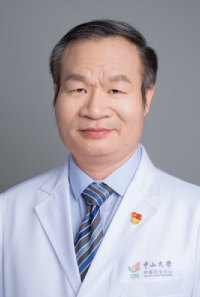
Prof. Hai-Qiang Mai
Assistant President; Director, Department of Nasopharyngeal Carcinoma; Professor and Chief Physician · Department of Nasopharyngeal Carcinoma, Sun Yat-sen University Cancer Center
Comprehensive treatment of nasopharyngeal cancer, including chemoradiotherapy and immunotherapy
- Nature Medicine 2021 (first author): Toripalimab or placebo plus chemotherapy as first-line treatment in advanced nasopharyngeal carcinoma: a multicenter randomized phase 3 trial — PubMed 34341578
- JAMA 2023 (first author): Toripalimab Plus Chemotherapy for Recurrent or Metastatic Nasopharyngeal Carcinoma: The JUPITER-02 Randomized Clinical Trial — PubMed 38015220
- Journal of the National Cancer Institute 2011 (senior author): Concurrent chemoradiotherapy vs radiotherapy alone in stage II nasopharyngeal carcinoma: phase III randomized trial — PubMed 22056739
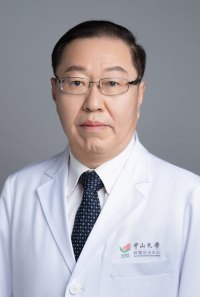
Prof. Li Zhang
Professor and PhD Supervisor; Deputy Director, Lung Cancer Research Institute, Sun Yat-sen University · Department of Medical Oncology, Sun Yat-sen University Cancer Center
Drug treatment of nasopharyngeal cancer and lung cancer, including chemotherapy and immunotherapy
- Lancet 2016 (first author): Gemcitabine plus cisplatin versus fluorouracil plus cisplatin in recurrent or metastatic nasopharyngeal carcinoma: a multicentre, randomised, open-label, phase 3 trial — PubMed 27567279
- Lancet Oncology 2021 (senior author): Camrelizumab versus placebo in combination with gemcitabine and cisplatin as first-line treatment for recurrent or metastatic nasopharyngeal carcinoma (CAPTAIN-1st): a multicentre, randomised, double-blind, phase 3 trial — PubMed 34174189
- Lancet Oncology 2018 (senior author): Camrelizumab (SHR-1210) alone or in combination with gemcitabine plus cisplatin for nasopharyngeal carcinoma: results from two single-arm, phase 1 trials — PubMed 30213452
Hospital: Sun Yat-sen University Cancer Center
- Founded in 1964 in Guangzhou; a Grade A tertiary cancer hospital.
- Ranked in the top five for oncology in the China Hospital Specialty Reputation Ranking (2023) published by Fudan University's Hospital Management Institute [14].
- Has a dedicated Department of Nasopharyngeal Carcinoma and an International Medical Center for overseas patients [7] [9].
- Listed among Guangdong's first pilot hospitals for international medical services in 2026 [15].
Costs
Your personal cost estimate is included in the specialist's written opinion.
| Item | China (SYSUCC International Medical Center) |
|---|---|
| Specialist's written opinion | US$199 |
| First visit, induction chemotherapy, IMRT course | Quoted individually in your cost estimate |
| PD-1 immunotherapy (per cycle) | See Chinese PD-1 drug prices |
| Accommodation near the hospital (28 nights) | Apartment-style room with fridge and washing machine: mostly US$750–1,000. Hotel room: US$1,400–2,250. |
| Food, local transport and other living costs (per person, per month) | About US$550–600 (around RMB 4,000) |
Accommodation: Trip.com prices for rooms within about 400 m of SYSUCC, 28 nights from 7 December 2026, checked on 12 November 2026, including taxes and the discounts shown at the time. Prices change with dates and season. Living costs: Numbeo, November 2026. More on accommodation.
From first contact to starting treatment
- Send your records
Pathology report, MRI/CT/PET-CT images (DICOM), EBV DNA test and treatment history. Same day - Initial review
A medical coordinator checks your records and has them translated. Within 24 hours - Specialist's written opinion
Recommended treatment and a cost estimate. Within 5 working days of receiving your complete records - Travel arrangements
Appointment, hospital invitation letter, visa support, accommodation and airport pickup. About 1–3 weeks, depending on nationality - Hospital visit
Consultation at SYSUCC, with additional tests if needed. Week 1 - Treatment starts
A coordinator and interpreter support you throughout.
Visa, payment and accommodation details: How it works.
Frequently asked questions
Can nasopharyngeal cancer be cured?
Early-stage nasopharyngeal cancer responds very well to radiotherapy. For locally advanced disease treated according to current standards, a large phase III trial reported a 3-year overall survival of more than 90% [2]. Trial participants are selected, so your own outlook depends on your stage and general health; the specialist will explain this in the written opinion.
How long will I need to stay in China?
It depends on the stage and the treatment plan. Locally advanced disease usually takes about four months. For recurrent or metastatic disease, the first chemotherapy cycles are given in China; whether later maintenance treatment can continue at home is decided by the doctor.
I do not speak Chinese. How will I communicate?
Our medical coordinators work with you in English (or Russian) throughout, and an interpreter accompanies you to appointments. The hospital's International Medical Center also has a dedicated team for international patients [9].
Can my family come with me?
Yes. We help you and your family find accommodation near the hospital.
What are the side effects of radiotherapy?
Common side effects include dry mouth, difficulty swallowing and hearing changes. Intensity-modulated radiotherapy (IMRT) targets the tumour more precisely and reduces damage to surrounding healthy tissue [10]. Your doctor will explain possible side effects and how they are managed before treatment starts.
How is follow-up done after I return home?
Follow-up usually includes regular plasma Epstein-Barr virus (EBV) DNA tests and MRI scans [10]. We arrange remote follow-up consultations, translate your reports and send your records to your local doctor.
How do I pay? Can I use insurance?
Hospitals accept self-payment. Some international departments in China also accept commercial insurance; whether your insurer can settle bills directly depends on your policy, and we check this with the hospital before you travel.
Is it easy to travel from Southeast Asia?
Yes. Guangzhou has non-stop flights to Kuala Lumpur (about 4 hours) and Jakarta (about 5–6 hours). Schedules change, so please check with the airline.
Can I get a specialist opinion without travelling to China first?
Yes. Upload your records and a specialist will give a written opinion. You can then decide whether to come to China.
Leading hospitals and specialists for nasopharyngeal cancer in China
From our directory of leading Chinese hospitals: where senior specialists list nasopharyngeal cancer as a clinical focus, sorted by their first- or senior-author papers on it since 2016. This is not a quality ranking. How we build this directory
Senior specialists in our directory
Prof. Linglong Tang(SYSUCC) · Prof. Xia He(Jiangsu Cancer Hospital) · Prof. Sufang Qiu(Fujian Cancer Hospital) · Dr. Xiaozhong Chen(Zhejiang Cancer Hospital) · Prof. Chuanben Chen(Fujian Cancer Hospital) · Prof. Ying Sun(SYSUCC) · Dr. Xing Lv(SYSUCC) · Dr. Linquan Tang(SYSUCC) · Dr. Weixiong Xia(SYSUCC) · Dr. Junlin Yi(CHCAMS) · Dr. Shaojun Lin(Fujian Cancer Hospital) · Dr. Yupei Chen(SYSUCC)
We have not necessarily worked with these doctors. Specialists we can connect you with are listed above.
Get a specialist's written opinion
Upload your pathology report and imaging. A medical coordinator will reply within 24 hours and pass your records to a nasopharyngeal cancer specialist.
Start hereReferences
- World Cancer Research Fund. Nasopharyngeal cancer statistics (GLOBOCAN 2022: 120,434 new cases worldwide; 51,010 in China). https://www.wcrf.org/dietandcancer/nasopharyngeal-cancer-statistics/
- Zhang Y, et al. Gemcitabine and cisplatin induction chemotherapy in nasopharyngeal carcinoma. N Engl J Med. 2019. PMID 31150573. https://pubmed.ncbi.nlm.nih.gov/31150573/
- Sun Y, et al. Induction chemotherapy plus concurrent chemoradiotherapy versus concurrent chemoradiotherapy alone in locoregionally advanced nasopharyngeal carcinoma. Lancet Oncol. 2016. PMID 27686945. https://pubmed.ncbi.nlm.nih.gov/27686945/
- Zhang L, et al. Gemcitabine plus cisplatin versus fluorouracil plus cisplatin in recurrent or metastatic nasopharyngeal carcinoma. Lancet. 2016. PMID 27567279. https://pubmed.ncbi.nlm.nih.gov/27567279/
- Mai HQ, et al. Toripalimab plus chemotherapy for recurrent or metastatic nasopharyngeal carcinoma: the JUPITER-02 randomized clinical trial. JAMA. 2023. PMID 38015220. Interim results: Nat Med. 2021. PMID 34341578. https://pubmed.ncbi.nlm.nih.gov/38015220/
- Yang Y, et al. Camrelizumab versus placebo in combination with gemcitabine and cisplatin as first-line treatment for recurrent or metastatic nasopharyngeal carcinoma (CAPTAIN-1st). Lancet Oncol. 2021. PMID 34174189. https://pubmed.ncbi.nlm.nih.gov/34174189/
- Sun Yat-sen University Cancer Center. Department of Nasopharyngeal Carcinoma — specialists. https://english.sysucc.org.cn/list_26.aspx?lcid=112
- U.S. Food and Drug Administration. FDA approves toripalimab-tpzi for nasopharyngeal carcinoma (October 2023). https://www.fda.gov/drugs/resources-information-approved-drugs/fda-approves-toripalimab-tpzi-nasopharyngeal-carcinoma
- Sun Yat-sen University Cancer Center. International Medical Center. https://english.sysucc.org.cn/index_79.aspx
- Chen YP, et al. Nasopharyngeal carcinoma. Lancet. 2019. PMID 31178151. https://pubmed.ncbi.nlm.nih.gov/31178151/
- Chen QY, et al. Concurrent chemoradiotherapy vs radiotherapy alone in stage II nasopharyngeal carcinoma: phase III randomized trial. J Natl Cancer Inst. 2011. PMID 22056739. https://pubmed.ncbi.nlm.nih.gov/22056739/
- Kong L, et al. Phase I/II trial evaluating carbon ion radiotherapy for salvaging treatment of locally recurrent nasopharyngeal carcinoma. J Cancer. 2016. PMID 27162535. https://pubmed.ncbi.nlm.nih.gov/27162535/
- Sun Yat-sen University Cancer Center. Department of Medical Oncology — specialists. https://english.sysucc.org.cn/list_26.aspx?lcid=99
- Fudan University Hospital Management Institute, China Hospital Specialty Reputation Ranking 2023 (oncology), as reported by The Paper. https://www.thepaper.cn/newsDetail_forward_25427491
- Report on Guangdong international medical service pilot hospitals (March 2026). https://huacheng.gz-cmc.com/pages/2026/03/27/df7448fe8b724aad84d266c2b0fe77db.html
- Liu YP, et al. Endoscopic surgery compared with intensity-modulated radiotherapy in resectable locally recurrent nasopharyngeal carcinoma: a multicentre, open-label, randomised, controlled, phase 3 trial. Lancet Oncol. 2021. PMID 33600761. https://pubmed.ncbi.nlm.nih.gov/33600761/